At a Glance
Melbourne has a population of c. 3.2 million people, from multiple ethnic backgrounds. Whilst the region has been settled by Indigenous people for thousands of years (see this link), European settlement only began in the mid 1800s. The current metropolitan region can be seen in the image below (in pink). Both domestically and internationally, Melbourne is well known for its vibrant sporting, artistic, and cultural facilities and events.
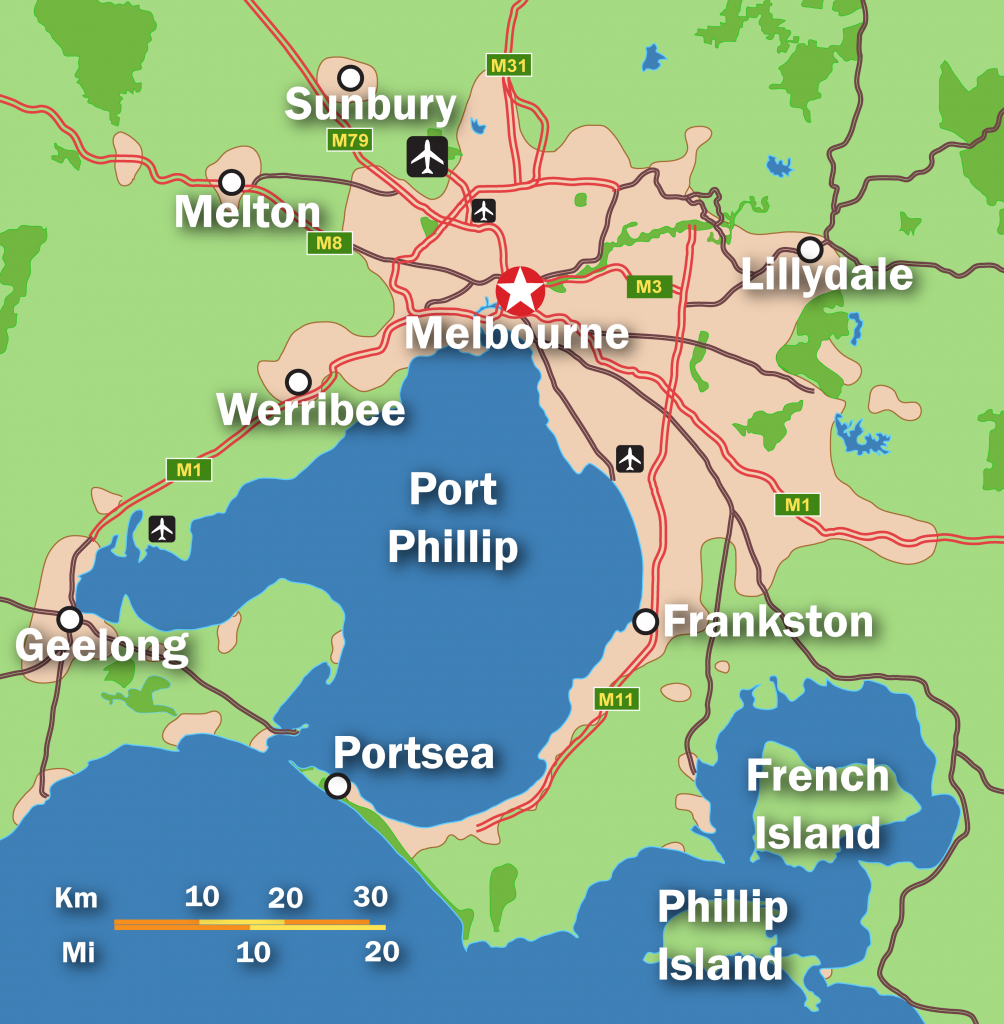
Image edited from the original (see https://commons.wikimedia.org/wiki/File:Greater_Melbourne_Map_4_-_May_2008.png).
You can visit the City of Melbourne website for everything Melbourne (its history, along with sporting, artistic, and cultural events).
Weather
Melbourne’s weather varies annually from the early 40s (summer) to below 10 degrees celsius (winter). In general, it has been famously summarised as showing ‘four seasons in one day’. What this means is that even on sunny summer days, it can become cool, and/or rainy. It is recommended that you prepare for his summer variability by taking an umbrella or raincoat, along with a sweater or jumper just in case. You can find more details about the average temperatures in each season here.
Public Transport
The best place to look for information involving all public transport in Victoria is the Public Transport (PT) website. Here you can plan your journey, look at routes and timetables, and check whether your transport is running on time. A very useful app for you to download can also be found here.
Travelling on most public transport in Melbourne requires a myki card. Instructions about how to access and add money to your card can be found here and here.
Melbourne has several options for you to travel, including trains, trams, buses, ferries, and bicycles.
Trains
The trains running in Melbourne can be broadly categorised as either metro (inside metropolitan Melbourne) or country (outside metropolitan Melbourne). All the relevant information regarding Metro trains can be found at the Metro Trains website, whilst information for Country trains can be found at the V/Line website. This includes timetables, routes, and fares.
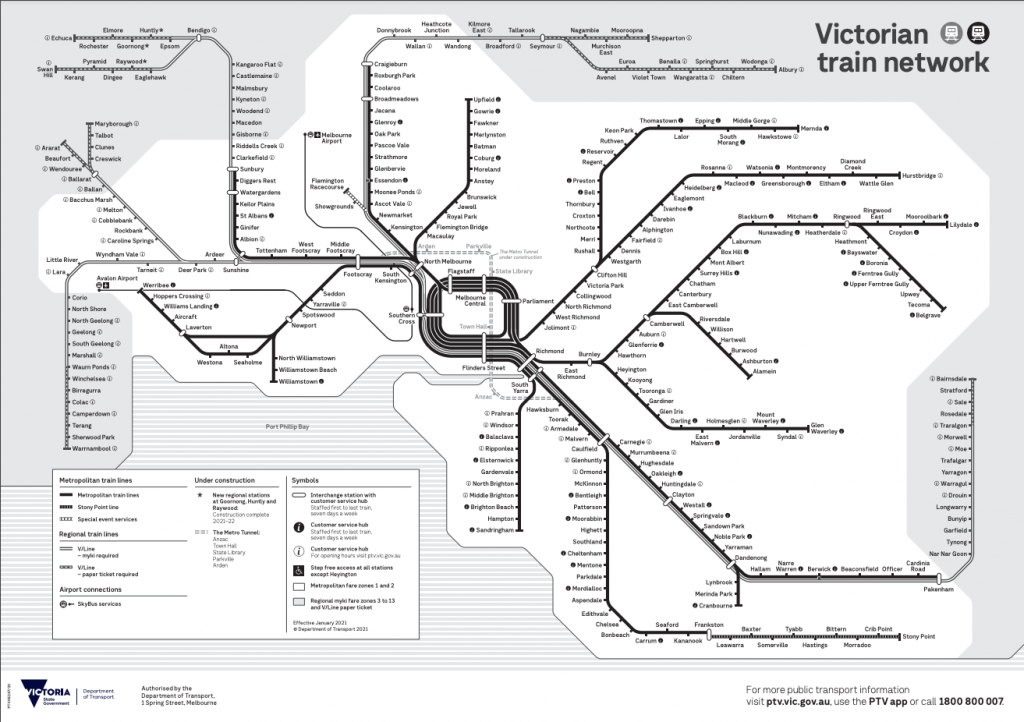
Modified image taken from the Public Transport Victoria Website (https://www.ptv.vic.gov.au/assets/PTV-default-site/Maps-and-Timetables-PDFs/Maps/Network-maps/e73cdb30ba/Victorian-train-network-map-31-Jan-2021-high-contrast.pdf).
Trams
Trams are limited to the Melbourne metropolitan area. All the relevant information regarding trams (timetables, fares, etc.) can be found at the Yarra Trams website.
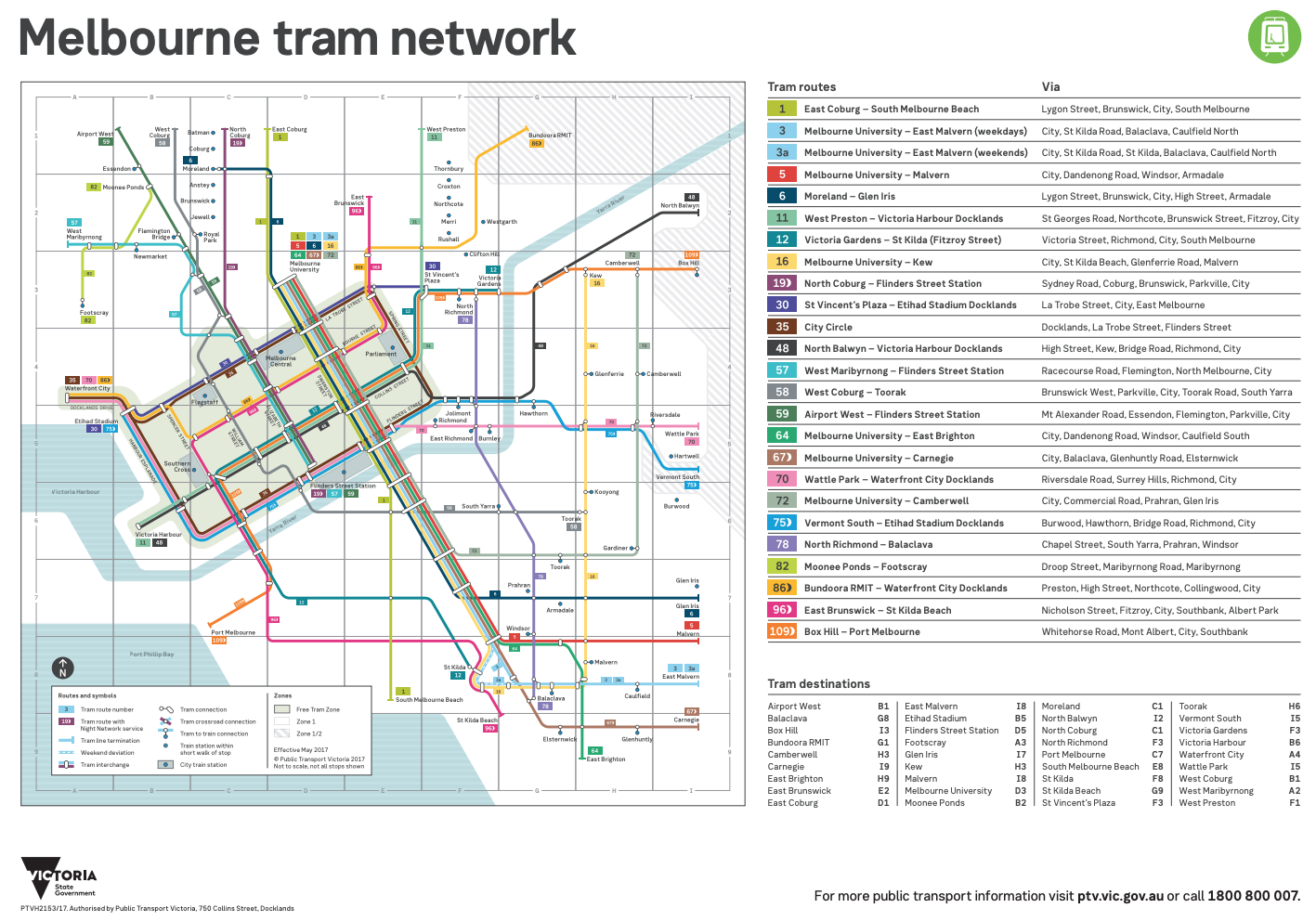
Image taken from the Public Transport Victoria website ( https://www.ptv.vic.gov.au/assets/PTV-default-site/Maps-and-Timetables-PDFs/Maps/Network-maps/PTVH5514-Yarra-Tram-Network-Maps-2021.pdf).
Buses
Buses run throughout both the metropolitan and country areas. Information about metro busses can be found at the PT website.
Ferries
Ferries run between various places in the Port Phillip Bay area (including Geelong and the Mornington Peninsula). You can find the various routes and timetable information at the Travel Victoria website.
Bicycles
Melbourne has an extensive network of bicycle routes, with some being exclusive for bikes and pedestrians only, whilst others are shared with motor vehicles. Whilst all riders must follow a number of road rules when riding a bicycle, the main ones to be aware of are as follows: (1) wear a helmet; (2) have working front and rear lights on your bike at night or during bad weather; (3) only those above 13 years of age can ride on the footpath (although there are several exceptions).
You can read about bicycle laws and general safety tips at the Victorian Government website, and the Legal Aid website.
Driving
In addition to the above travel options, you may be eligible to drive a car. Broadly speaking, you must convert your licence within 6 months or arriving in Australia, or if living in Australia longer than 6 months, apply for a Victorian licence. There are many important laws regarding driving, including whether you can have any alcohol in your body. The main rules to be mindful of are: (1) drive on the left side of the road; (2) keep to the speed limit; and (3) do not use your mobile device whilst driving. Driving on country roads throughout Australia can be quite challenging as animals (e.g., Kangaroos) may suddenly appear.
The VicRoads website has all the relevant information about licences here and road rules here.