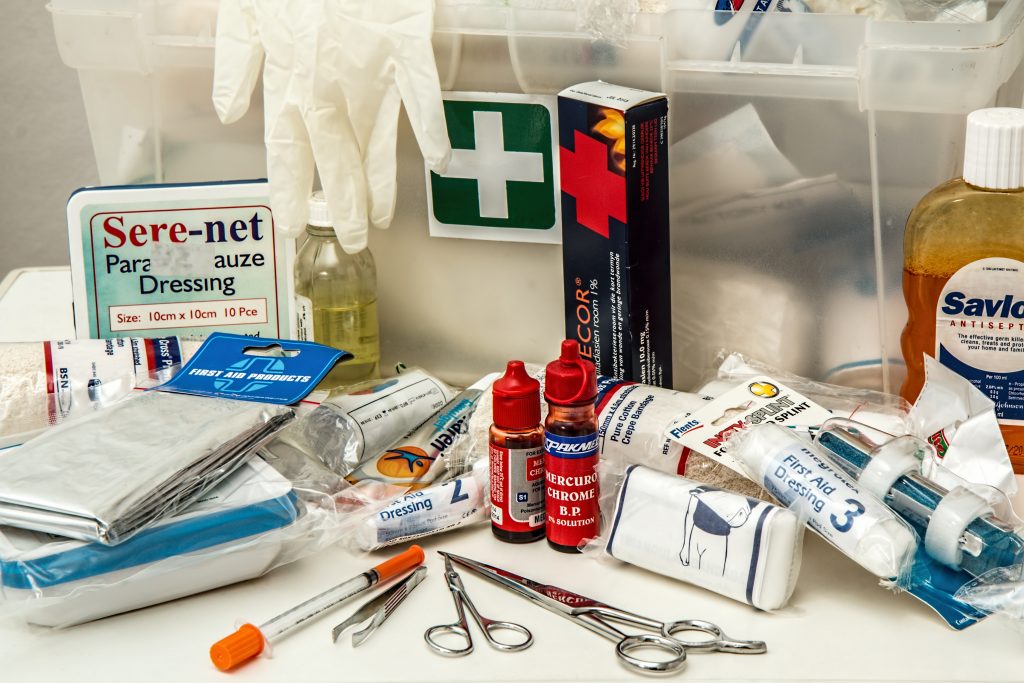
COVID-19
The Cairnmillar Institute’s policy on COVID-19 can be accessed here. Please note that there are mandatory requirements regarding vaccinations.
You can find information about the latest legal requirements in Victoria by visiting the Victorian Government’s Coronavirus website. This covers travel and vaccination requirements.
You can access information about COVID-19 in your own language by visiting the SBS languages website.
Occupational Health and Safety (OHS)
The Cairnmillar Institute (the Institute) aims to provide a safe and healthy work environment for all employees, volunteers, contractors and visitors to the workplace. The Institute has a commitment to providing an environment that promotes and supports the physical and psychological health and wellbeing of all. The full OHS policy can be viewed here. In short, the Institute must maintain a safe, healthy and productive workplace for all employees. All employees, including students, are responsible for ensuring this goal is achieved. The general OH&S process can be summarised as follows:
-
Report all known or observed hazards to their immediate supervisor or manager.
-
Take all steps within their control to maintain their own health & safety and the health and safety of others.
-
Operate plant and equipment in a safe and responsible manner.
-
Wear appropriate personal protective equipment.
In the event of an injury, the specific OH&S process is as follows:
-
The first priority is medical attention. The injured person or nearest colleague must contact one of the Institutes first aiders. For a serious injury, also call an ambulance (see information emergency services below).
-
Any employee who is injured on the job, or who experiences a safety incident or a near miss, must report the incident to their manager using the Incident/Injury/Hazard form (see critical incidents information below).
-
On receipt of this form the manager must write a report in the Register of Injuries, incidents and near misses.
-
The Institute must let the injured employee know in writing that the Institute has received notification of any injury or illness reported in the Register.
-
The Head of Corporate Services must report serious injuries to WorkSafe immediately.
Critical Incidents
A critical incident refers to a traumatic event, which is likely to cause extreme physical and/or emotional distress involving Cairnmillar staff and/or its students. It is crucial that you fill in the appropriate incident form within 24 hours of the incident. This form, as well as the full critical incidents process and policy, can be found here.
First Aid and Fire Wardens
Cairnmillar has several first aid officers (to respond to medical incidents) and fire wardens (who organise responses to any fires). You can fine these people here.
Emergency Services
There are several emergency services that you can contact if required.
If you think you have a life-threatening emergency (whether medical, physical threat, fire, or flood, etc.), please ring ‘000’. Once contacted, the operator will determine what emergency service you need. It is crucial that when using this service, you remain calm, patient, and know your location. The website for this service can be found here.
For non-life threatening emergencies, please contact the police by calling ‘131 444’, fire department by calling ‘1300 367 617’, or emergency state services by calling ‘132 500’.
The Victorian Government also has a VicEmergency app which is recommended for download via the respective app download sites. This will allow you to check and monitor threats in areas you may be in (or plan to travel to). Please note that Australia is susceptible to very dangerous fires and floods, particularly during the summer seasons. Checking whether such events are in your regions is an important component of everyday life. The Australian Government’s Bureau of Meteorology website will have such information, and downloading their app is also highly recommended.
Campus Safety
When you are on campus, please ensure you follow the policies regarding OH&S and critical incidents, both described above. Furthermore, please ensure you do not leave any valuable items (e.g., wallets, computers, etc.) unattended. Although the carpark is located under the campus, please try to actively ensure your safety when walking to and from the campus (e.g., during night time periods, you may wish to ask for another student or staff member to accompany you).
Water Safety
Australia is particularly well-known for its swimming lifestyle, including beaches, rivers, and pools. It is important to remember that swimming always poses potential hazards and risks (for example, strong currents can easily pull a strong swimmer out to see; some beaches and rivers contain sharks, etc.). Approximately 25% of drownings involve people who are born outside of Australia! The Life Saving Victoria website has fantastic up-to-date information about which beaches are patrolled (and are currently safe), along with general safety tips for swimming. The Beachsafe website (and app) also has great information, including explanations of different flags used on beaches, as well as the marine life to be careful about (e.g., sharks, blue bottles, etc.). A short video from the Beachsafe website can be seen below about understanding flags on Australian beaches.
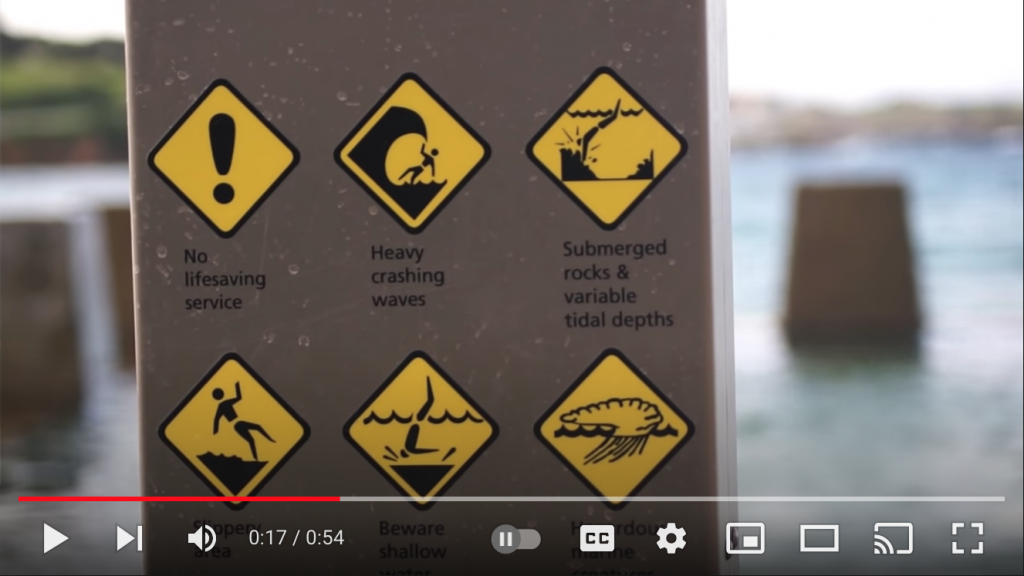
In general, try to ensure that you swim at safe locations (i.e., beaches which are patrolled by lifesaver guards, who usually have a designated area for patrol using flags), with at least one other person near you, and not under the influence of any illicit drugs (including alcohol).
Bush Safety
Australia has numerous opportunities for natural walks. However, it is important that you do realise the risks. In particular, many outdoor areas contain snakes and spiders (which can also be in urban areas around the home). As a general rule, when encountering a snake or spider, it is best to simply avoid it. If the snake or spider is around/inside the house, again, avoid it, but observe where it goes to ensure that professionals can find and remove the snakes if needed. If you are bitten by a snake or spider, call ‘000’ immediately. The Travel Victoria website has general information about local deadly or dangerous Australian animals found in Victoria (including red back spiders, snakes, and kangaroos). Please note, as you travel further north in Australia, different animals may become a risk (for example, crocodiles are evident in Queensland, Western Australia, and the Northern Territory; Funnel web spiders are more likely along the east coast of New South Wales).
Sun Safety
Whilst Australia has a variable climate, it can become intensely hot particularly in the summer months. At all times of the year, you are encouraged to be sun smart to reduce the likelihood of sun damage (via ultraviolet radiation) to your eyes and skin. In serious situations, skin cancers can develop as a result of sun exposure. The Australian Cancer Council website has great information about how to protect yourself against the sun, and they also have an app you should download. In short, try to follow the Cancer Council’s 5 simple rules (‘the 5 s’s’):
1. Slip on covering clothing.
2. Slop on SPF 30 (or higher) broad-spectrum, water-resistant sunscreen.
3. Slap on a hat.
4. Seek shade.
5. Slide on some sunglasses.
Health Services
When you need to access health services, you can try the following search engines: healthengine, or healthdirect, or HotDoc. In Australia, for many problems you may have, you first start by seeing a general practitioner (GP), who may refer you on to specialists (e.g., psychologists, urologists, etc.). You do not need referrals for visiting dentists, or alternative health services such as chiropractors or acupuncturists. If you are not sure, you can ring the practitioner you are wanting to visit, who will clarify for you. Be mindful that you should clarify any cost issue before you make any appointment. There are multiple pharmacies (or chemists) where you can obtain medication, although some medications require you have a valid prescription from a doctor.
Overseas Student Health Cover (OHSC) is a mandatory requirement for international students (although there are some exceptions). You can find information about this requirement by visiting the Studies Australia website. You can also find information at the Private Health website, and the Australian Government’s Department of Health website. OHSC covers many, but not all medical aspects you are likely to face in Australia.
Mental Health Services
As a Cairnmillar student you are entitled to a limited number of free mental health services (New View Psychology and Miss Marilyn Cobain), all of which you can find information about here. If you wish to pursue additional services, please try any of the search engines listed above under ‘health services’.
Additionally, there are several excellent community services which are free. These include Lifeline (ph. 13 11 14), Beyond Blue (ph. 1300 22 46 36), Mensline (ph. 1300 78 99 78), Alcoholics Anonymous (ph. 1300 22 22 22), Gamblers Anonymous, Griefline (ph. 1300 84 57 45), the Centre Against Sexual Assault, and Headspace.
Legal Services
As an international student you are able to freely access several services, including Victorian Legal Aid, the International Student Employment and Accommodation Legal Service, run by Study Melbourne, and International Student Help run by Inner Melbourne Community Legal.